ONTOLOGY PART 2 – MENTAL HEALTH, BODIES, MATTER AND THE SOCIAL FIELD.

N.B. This is part two of a three (possibly four) part series on ontology. Part 1 (found here) looked at the mind-body problem and argued that there is no meaningful separation between the two, that both mind and body constitute each other. In part 2 we will extend this logic to look at subject formation (how we come to *experience* as human beings in the world). Here I will use the widely debated concept of ‘mental health’ to argue that there is no such thing as the individual human and that our subjectivity is produced through complex interactions between our bodies, other bodies and the social-material world.
PART 1 - THE TYRANNY OF BINARIES
There’s a refrain that leftists keep returning to each time something bad happens in the social field. I’m paraphrasing here but it goes something along the line of ‘I knew the end times were coming, but I had no idea they’d be this stupid’. And it’s true. We live in the ‘you can say any old shit now’ era where the dumbest of the Silicon Valley tech-bros rule the world and can say anything they want and have it be taken seriously due to the raw power they are able to wield.
Obviously this manifests in myriad forms, but one thing I have observed over the past few years in more liberal circles is the way this stupidity presents itself in the tyranny of binaries. Despite their semantic calls for nuance, liberals love a binary. Labour or Tory (a vote for the Greens is a vote for Reform!) Man or Woman (gender is fixed and there are only two and its as simple as that...if you ignore vast swathes of scientific literature to the contrary), EU Supergirl or Hard Brexit Thug (Corbyn was right fwiw, the EU gets 7/10…probably lower tbh). And what’s the important thing when faced with a binary? You have to pick a side! You have to choose the right team and condemn your opponent. One is right, the other is wrong! One must succeed, the other be defeated!
One of the most damaging of these binaries is the one deployed in conversations relating to mental health in which it either exists as a wholly biological phenomenon or a wholly social phenomenon. Either side of the binary can be worked towards (supposedly) progressive or (definitely) regressive ends.
A wholly biological understanding of mental health can be used to pathologise, via the Diagnostic Statistical Manual (basically, a big bible of mental health conditions crudely measured against blunt and fixed criteria. It essentially argues you have met the criteria for a mental health problem if, for some reason, you are unable to go to work). Nevertheless, a wholly biological understanding of mental health can also be used to claw back dignity and control. A biological understanding allows the mental health sufferer to say, ‘it’s not my fault, I cannot help my condition, I cannot pull myself together’. To be understood as ill and in need of care.
Mental health as a wholly social phenomenon can be used to undermine the concept of the existence of mental health as a whole, as is being done on the right and centre right (cough, Wes Streeting, cough) currently. The goal here is to take away rights, defund support and generally immiserate sufferers so that they are forced to ‘stop complaining’ and get back to work. However, mental health as a social phenomenon is also used by naïve liberals on the centre left who want to ‘liberate’ sufferers from the shackles of pathologisation. Here labels are understood as a social construction, and any identification with any notion of a mental health condition is somehow damaging your self-efficacy and limiting you from your true potential. The MH sufferer needs to channel a new discourse, telling new stories and more positive stories about their life. The unfounded principle here is that language creates reality (for more on why this is nonsense, give this a read). If we tell a new story we can create new ways of being so we can lead a happier and more fulfilling life (under capitalism?)
However you cut it, none of these arguments work. Biological explanations reify the human (i.e. they turn living, breathing subjects who are constantly growing, developing and changing into fixed objects…we are objectified under a fixed unchanging category – anxious, depressive, obsessive etc.)
Social explanations deny the lived experience and reality of mental health. They disembody us and flatten the human experience, as if every body were the same and our biological differences played no part in our subjective experiences.
Furthermore, both biological and social explanations deny human agency, they render us docile, limp. Passively acted upon by something either within us, or something without.
And so we fall into another useless binary. As with so many things we can either be one fixed thing or another fixed thing under capitalism. Yet, what if we could be both things at the same time? And what if they weren’t fixed but instead were constantly in flow, constantly reproducing each other? This is the sort of thinking I want to move towards as we try to emancipate ourselves from the tyranny of binaries.
PART TWO – BODIES WITHOUT BORDERS
TOWARDS A MORE DIALECTICAL UNDERSTANDING OF MENTAL HEALTH
'Men make their own history, but they do not make it as they please; they do not make it under self-selected circumstances, but under circumstances existing already, given and transmitted from the past. The tradition of all dead generations weighs like a nightmare on the brains of the living.'
Eighteenth Brumaire of Louis Bonaparte. Karl Marx 1852
In the above quote, Marx is trying to make sense of historical developments and how they actually work. Here he is challenging the way traditional historic narratives are spun (often great man of history narratives where history moves forward as one rich powerful white man defeats another rich powerful white man in combat). And what I love about this quote is how deftly it steps out of any sort of binary-type thinking. Men (I’m aware of the gendered language but it was 1852 tbf!) here are *active* participants shaping history, but they can only act in ways that the history they have been born into will allow.
This is a history that presents biology (the individual) and the social (historical events) as mutually producing and shaping each other. This is the dialectic, a contradictory relationship between two forces (effectively breaking down the wall between two discrete components of a binary and revealing them to be internally connected and in tension with each other) that produces change.
What does this offer us, theoretically speaking? In a nutshell - a way out from thinking about the world as simple, fixed and separated factors. We know intuitively that our bodies are in flux. I am not the same person I was 10 years ago. This is a literal statement (the average age of cells in a human body is around 7 years, they all go through a process of change and replacement). But it is also a dialectical statement. I am not passive, I go out into the world. Yet the world enters me also. I live in Leeds, one of the most polluted cities in the country. I go outside, I breathe in petrol and my body fills with microplastics. A negative effect, no? But maybe this encourages me to join the Green Party. Which helps me meet like-minded people, whose jocular presence changes my body chemistry for the better. Which helps me to go out into the world as part of a collective which aims to reduce levels of pollution via political activism.
Do you see? Rather than separate factors organised into binaries, we see an internal relationship between constantly changing influences that produce change itself at all levels; individual, social, political, material.
BEYOND DIALECTICS TOWARDS A RHIZOMATIC PSYCHOLOGY
What if we applied a dialectical understanding to our formation as subjects? Well then it would be clear that in the same way a contradictory relationship between history and the individual produces events, a contradictory relationship between our biological bodies and our social world produces our subjectivity.
This kind of stuff works at a material level. In the example above, I could not join the green party and engage in activism against pollutants if I lived in a pre-capitalist age where the petrochemical world did not yet exist. But this is also an intensely social dialectic. Our bodies should no longer be understood as border-walls, but as porous entities out of which energies flow and into which energies are received. Think of the last time someone you loved walked into a room, or someone you found sexually attractive, or someone you hated the fuck out of. Your body chemistry would change as you saw them, your eyes might dilate or contract, your body might be flooded with dopamine or cortisol. As they walked closer their pheromone molecules would enter your body and change you at a material level, further accentuating the embodied feelings that Teresa Brennan describes as the transmission of affect. At the same time, the same processes will be happening in the other person. It will change how you interact with each other. How you behave. This molecular entanglement will produce how you experience the interaction. Over time the sorts of interactions we have with each other and the world can affect our bodies on a genetic level. Our brains can take on different proportions. Our very sense of self is not individual. It is produced by how we move through the world, how the social field allows us to move through the world, and who we move through the world with.
Let’s continue to take my favourite test subject as a worked example – me. I am prone to anxiety and obsessive-compulsive thought patterns. Biologically I am likely to have inherited certain traits from my father who also exhibited these mental health factors. Maybe I was just born with more norepinephrine in my system than is statistically average, or not enough serotonin.
However, these biological predispositions are not necessarily a deficit, indeed I will argue they can present with an advantageous nature shortly. Rather, their nature cannot be made sense of outside of the internal contradiction within which my biology is always situated. I am not an individual, I am part of the social world, and the socio-material world interacts with my body to produce and reproduce me over and over again as I move through it. Depending on the set of social and material factors my body is presented with, my subjectivity changes. I am never fixed, I am engaged in a constant series of becomings.
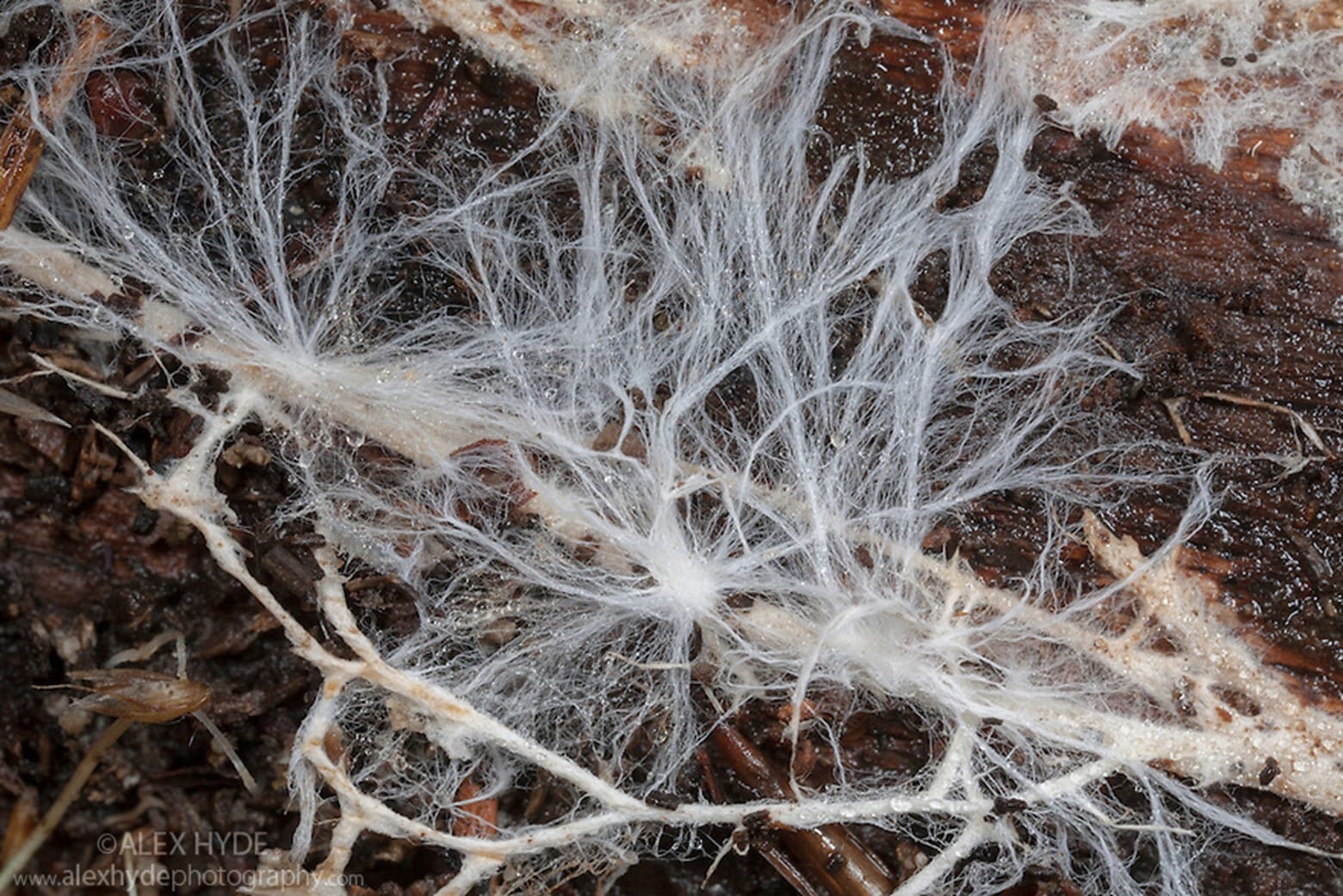
Maybe this is where the dialectic becomes less useful. It’s a nice starting point, to understand the tension between two interrelated factors as producing change. But what if we were to move towards a more Deleuzo-Guattarian way of seeing things. Let’s throw in a fun word: rhizomatic! A rhizome is a network of myriad interconnected factors that all mutually influence and produce each other. It has no centre, no hierarchy, it is non-linear and any point can connect to any other.
I like this idea because it doesn’t require the inherent negativity (tension?), nor the containment of two forces, that the dialectic presupposes. It frees us to think about the world as an endless interaction between loads of connected stuff that produces a massive array of phenomena. It also decentralises the human, placing us, in a non-hierarchical way, into a system that is producing itself. One day I will flesh out what I’d like to narcissistically call the ‘Octigan-Paradox’, which is essentially the idea that if we are to truly understand the human we need to distance ourselves from the human as the central point of analysis.
Understood in this light, we have to understand the world as a set of rhizomatic assemblages. An assemblage might be understood as a group of forces that come together in a period of relative stability, though how stable and for how long depends on the nature of the assemblage. A mountain could be understood as a very stable assemblage of atoms, rocks and minerals all in motion but moving at a very slow speed. A classroom could be understood as a brief assemblage consisting of a teacher and thirty learners, which only lasts for the hour the lesson takes to deliver, before the learners and teacher disperse and go out into the world to form new assemblages elsewhere.
My body is an assemblage of atoms, formed into organs. My body goes out into the world and interacts with others (the social) nature (the material) and politics (the ephemeral) to constitute new assemblages that come and go (the family unit in a house, a grouping of friends down the pub, a collection of work colleagues in a meeting room). There is no central node to these assemblages. They are as much a part of me as I am of them. The assemblage changes me as I change it…it constitutes me (biologically, psychologically) as I constitute it by becoming a part of it. Nothing is fixed, everything is in motion. Think of the way water comes together in a wave, only to break and get dragged back via the undertow to form another wave in an endless cycle.
THE ‘CONNECTION POTENTIALITY’ AND THE ‘ANXIOUS POTENTIALITY’
Why care? Well, this theoretical framing allows us to move beyond binaries where we pick a side, towards thinking about different sets of assemblages and what effects they produce. Yes, my body has a relatively stable biological assemblage which might be more prone to anxiety than another body, but within me are a multiplicity of potentialities which will either be held-back or set-free depending on the assemblage my body is a part of.
This is a theoretical standpoint that can allow for such biological understandings whilst sidestepping pathology. Here it is worth updating an earlier point: The nature of my subjective self is neither independently positive nor negative as it cannot be made sense of outside of the assemblage within which my biology is always situated. As Walt Whitman said, ‘I contain multitudes’.
(As a slight aside, it is important for us to note that these multitudes, whilst vast, are not infinite. Whilst Deleuze invoked Spinoza in proclaiming ‘no one knows what a body can do’ in order to explore the vast potentiality of the human body, we don’t want to run the risk of denying real bodily limitations. Within certain assemblages I may be able to fly, but I will never be able to levitate. Biological impairments are real and they really do limit what is possible for a person to do in the world. We need to take this seriously so as to not do away with biological limitations and therefore not meet the needs they produce. However, as per the social model of disability, it is more often than not the societal assemblage that actually disables a person, rather than their impairment).
This blog-post is already a huge act of self-indulgence so I’m not going to list 3,000 different potentialities I suspect are within me. But to continue with the auto-ethnographic task I’ve set myself I’ll consider two: a ‘connection-potentiality’ wherein I have no mental health problems whatsoever and an ‘anxious-potentiality’ wherein I’m all mental health problems all the way down.
Certain assemblages set free my ‘connection-potentiality’. When this potentiality is facilitated via an assemblage I make connections with others easily, I am able to contain complex problems and connect with children, families or members of the trade union to ensure they are being heard. I am analytical, I am critical and I have a strong moral core that enables me to say things others would be reluctant to. Maybe during these moments my serotonin levels are raised because I find the work meaningful or because, as per Teresa Brennan, the affect of those I am in solidarity with is transmitted from their bodies to mine via the social nature of collective action.
You might say that, during these moments I reach a flow state. I am content, I am happy. I feel energy, connections, possibilities and even a sense of love for my connected place with and amongst other humans. That’s not to say it doesn’t produce certain contradictions (I will never occupy a high-status position within my profession for example), but the interaction between my biology and the socio-material world creates a me that works for me.
Before I blow too much smoke up my own arse and go full liberal (I got where I am today because of HARD WORK!), it is important to note that this connection-potentiality within me (a biological potentiality?) is only facilitated via a set of social forces that are also at play. I have a doctorate in a well-paid job. I have a lot of professional autonomy, which gives me the freedom to exercise my own judgement about ethics and ethical practice (though it must be noted, a lot of the most worthwhile things an educational psychologist does happen when they step away from producing a monetisable product - a report or an assessment - and engage relational, process based work). I am paid to advocate for my members, I am financially comfortable. When I was a teaching assistant at the start of my career on an awful wage and desperately needing experience in educational settings, my predisposition towards advocacy was blunted by socio-material forces that meant I had to get my head down and get on with things. (Part 3 of this series will essentially explore the mechanisms as to how we are and aren’t allowed to act under capitalism, but a need for money to survive is surely one of the most important factors preventing free action).
Yet within other assemblages my ‘anxiety potentiality’ may come to the fore. I am regarded by those around me as ‘sensitive’. When things are working well, I feel this sensitivity connects me to those I come into contact with in positive ways. However, when I am isolated (working from home, full of coffee, processing bereavement) or unable to access the things I need (rest, exercise, peace, love and care) I am also prone to periods of embodied anxiety where I struggle with interaction, doing a job, being a human etc. Periods where, to be quite frank, it feels fucking horrible to be inside my own body. Here, I don’t feel flow, or connection. I feel blocked, I feel a pressure inside me, I feel an electric disassociation where I cannot settle or think straight. This is where another potentiality within me comes to the fore, my potentiality for poor mental health.
THE ANTI-CAPITALIST ASSEMBLAGE VS THE CAPITALIST ASSEMBLAGE
Again, I am simplifying things for brevity and understandability here, but the real question becomes: within which assemblages do I feel good? With its inverse also important to consider: within which assemblages do my mental health problems emerge?
Obviously the answer to this question is going to be different for different people, but I’d wager our mental health is generally much worse when we are situated within capitalist-assemblages and generally much better when we are situated within anti-capitalist assemblages. How might I define the two states? Maybe a simple way to do so would be to consider one of Marx’s earliest dialectic arrangements within Kapital Vol.1, that of use-values vs exchange-values. Marx argues here that any commodity can have either a use-value (e.g. a shoe can be worn to protect your foot and make you comfortable whilst you walk) or an exchange value (e.g. a shoe can be sold for a certain amount of money at market). However, to sell a shoe you cannot wear it and vice-versa to wear a shoe you cannot sell it. Put simply, you cannot realise exchange-value if you are focusing on use-value and you cannot realise use-value if you are focusing on exchange-value.
Why does this matter? Well, under neoliberalism and late-stage capitalism everything ends up getting measured by its *exchange value* and, due to this state of affairs, use-value is no longer realised. At the level of commodity, this means products are clearly just shitter than they were. A pair of shoes might last a year now when once they would have lasted a lifetime. But we don’t care about use-value anymore, only exchange.
At the level of the social field, the use value of a playground is immeasurable, but it has no exchange value so they all get left to rack and ruin. The same could be said about free-art, about a walk in nature, about youth clubs, community centres. All neoliberalism has taken from us had little in the way of exchange-value because its value was realised in the social use-value it had.
This logic also works when it comes to humans and our subject formation. This logic has seeped into our very bones. It was Marx who recognised when talking about the working day that the capitalist norm of ‘time=money’ has affected our subjective understanding of time itself and in 2026 we are all working longer and harder to realise *our own* exchange value. What suffers? Our *use-value* to ourselves, to others. We no longer have time to do what we need to do to remain mentally well (socialise, recharge, engage in spiritual endeavours, community work etc) because the only kind of value that exists under late-capitalism is exchange value and due to this, use-value suffers. We become alienated subjects. Alienated from each other in our social relations (those we spend time with become competitors or line managers rather than friends or loved ones), in our relationship to nature (which we consume as fuel), in our relationship to our work (over which we have no control) and in our relationship to ourselves (to whom we are forced to be inauthentic).
We have become reified under a capitalist assemblage that treat humans as units of exchange-value production that can be treated like shit, all whilst non-human objects like the stock market or the latest iPhone are subjectified with the level of care you might expect to give a new-born baby. No wonder everyone is ill, no wonder the mental health crisis is real . Under such an assemblage we are isolated (at best only connected to a nuclear family), overworked, and exhausted. We have no future to look forward to because capitalism is destroying the natural world for its exchange-value. We can no longer afford to basics, never mind luxuries. There is no god. Life has no meaning, except in realising exchange-value, and everything is getting worse.
Indeed, it is in the fleeting moments where we are able to step outside this capitalist assemblage, even just partly (for it is virtually all-encompassing after all), where we might reclaim a little happiness, where our mental health problems subside for a bit. Where we can feel at peace, even if just for a moment. The Covid-19 lockdowns were awful for some – assemblages may have been beset by struggling to meet the needs of children, being stuck in poor quality housing, being isolated and alone. But those of us who were lucky enough to be furloughed, bubbled up with a group of people we loved, and able to sit outside in the sun on a small plot of land where we felt safe, got a glimpse of what an anti-capitalist assemblage could look like. What did we learn from this experience about mental health, and about ourselves? That we don’t need to buy commodities to be happy. That we don’t need holidays or nice things. That we just need time, space and each other. That we need to be able to afford to stop. That all the things we fill our day to day with might not actually mean all that much. That ‘doing stuff’ might actually be the problem. Maybe these are the foundational starting points in how we understand how to live a life lived without mental health problems.
CONCLUSION - THE BEST THINGS IN LIFE AREN’T FREE
Ultimately, this rhizomatic understanding of mental health allows for us to understand mental health as a political issue. Yeah, yeah we all know that one super chill person who is unrufflable in the most stressful of circumstances. However, though some of us are more biologically prone to mental health problems than others, by and large certain assemblages (nature, family, friends, recreation) facilitate the prominence of certain psychological states (calm, peace, space, safety) and other assemblages (work, poverty, isolation) facilitate the domination of other psychological states (stress, suicidal ideation, depression, anxiety). Furthermore, it must be noted that it is the logic of capitalism that drives us towards endless work, poverty, and isolation and it is stepping outside these assemblages (e.g. stopping, breathing, connecting) that allows us to regain a sense of stability and peace.
As I will say again and again, biologically speaking we are what we are. Beings who should not be judged and who should understand themselves as exactly who they need to be. It is only within the immanent oppression of capitalist social relations that we come to understand ourselves as broken and unwell. But that interaction between our bodies and capitalism is real, and so are the effects it produces.
And yet (and here we return to more traditional understandings of Marxism I started the text with) this shared experience is not one we experience passively. We recognise it in others, in our collective suffering. Moving back to more traditionally dialectical thinking, we recognise the contradictions inherent in our relationship to the social. The more free we are told we are, the less free we are to act. The more we are told to enjoy, the more we suffer. The more we are reassured of our safety, the greater the danger we are in. And such experiences help to raise our collective consciousness in such a way that we can wrench loose the ever-tightening grip capitalist social relations hold over us, reclaim our agency, reject passivity and fight for something new. An assemblage that brings out our best potentialities. The potentialities that allow us to act in a way that makes us happy, calm and optimistic for the future.
I will conclude on this reintroduction of human agency into the analysis as this will be a central theme when I return with part 3 in this series. I will return to the Marxian dialectic I presented earlier (the world shapes us as we shape the world) to try to consider how capitalism creates opportunities and barriers for action that shape our subjectivities, what kinds of subjectivities this creates and what collective action we could pursue as agentic beings in the world, to create a new world within which we can experience more productive and happier forms of subjectivity.
Further Reading
The Transmission of Affect – Teresa Brennan
Capitalism and Schizophrenia (Anti-Oedipus and One Thousand Plateaus) – Deleuze and Guattari
The Eighteenth Brumaire of Louis Bonaparte. Karl Marx 1852